Completion of the Twelfth Scientific Conference on Eastern Languages
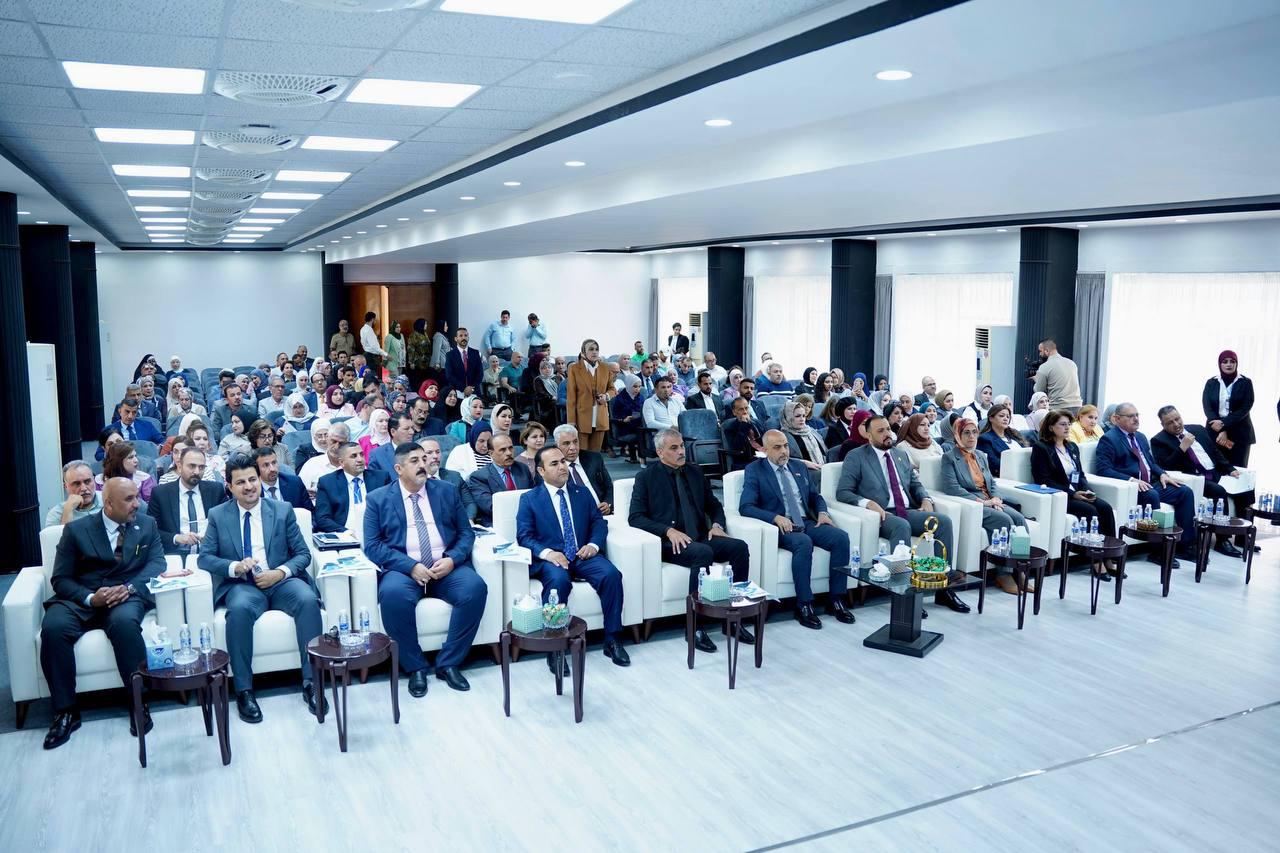
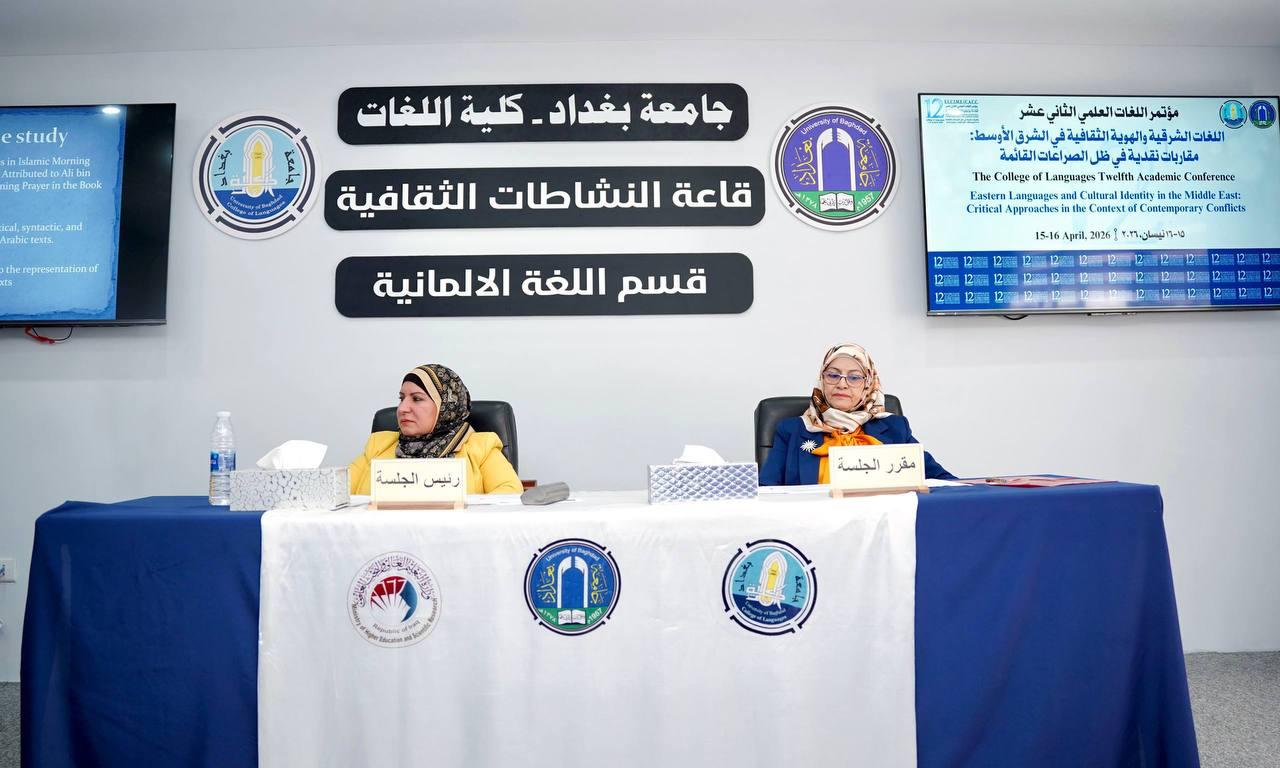
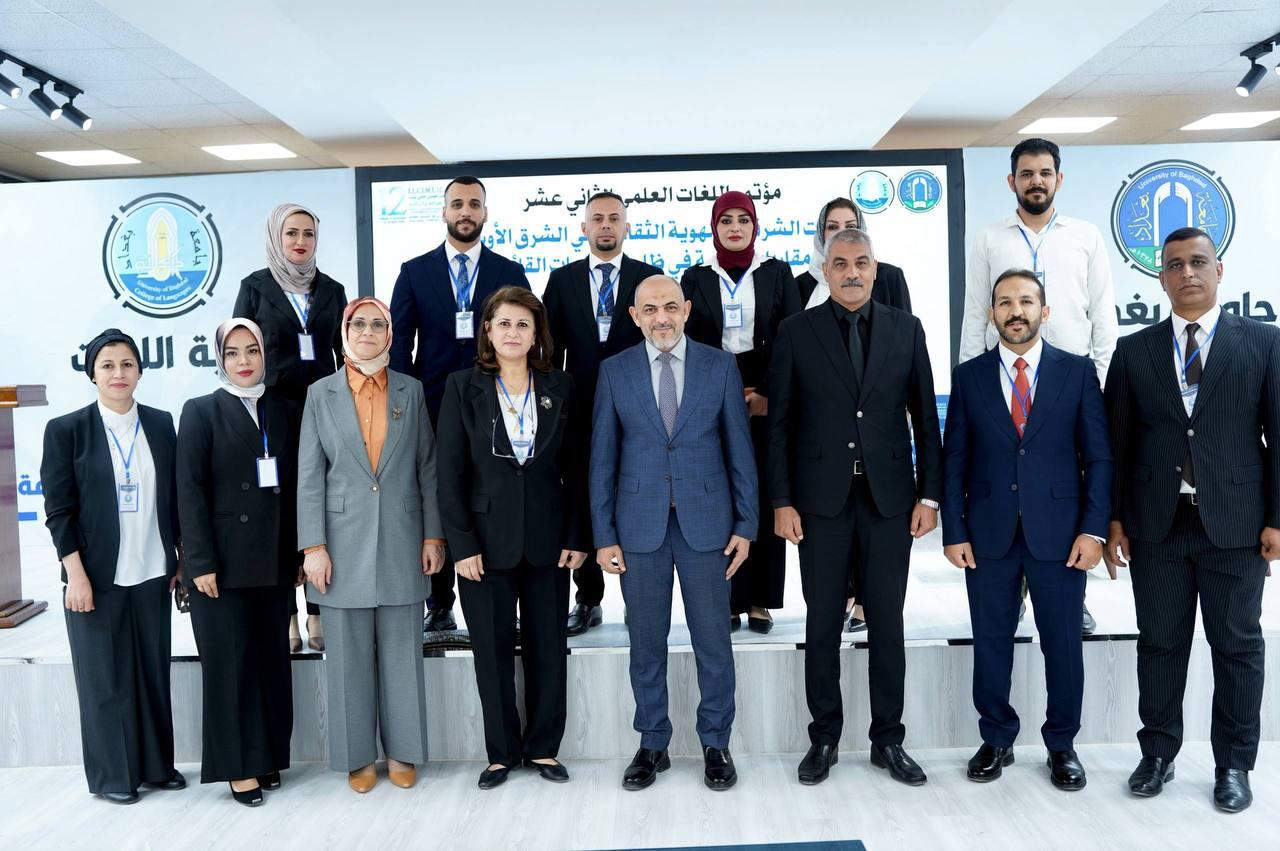
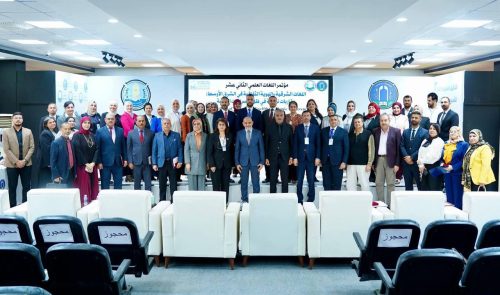
The College of Languages concluded the activities of its Twelfth Scientific Conference, titled “Eastern Languages and Cultural Identity in the Middle East: Critical Approaches Amid Ongoing Conflicts,” on Thursday, 16 April 2025, following two days of intensive academic discussions and scholarly dialogue.
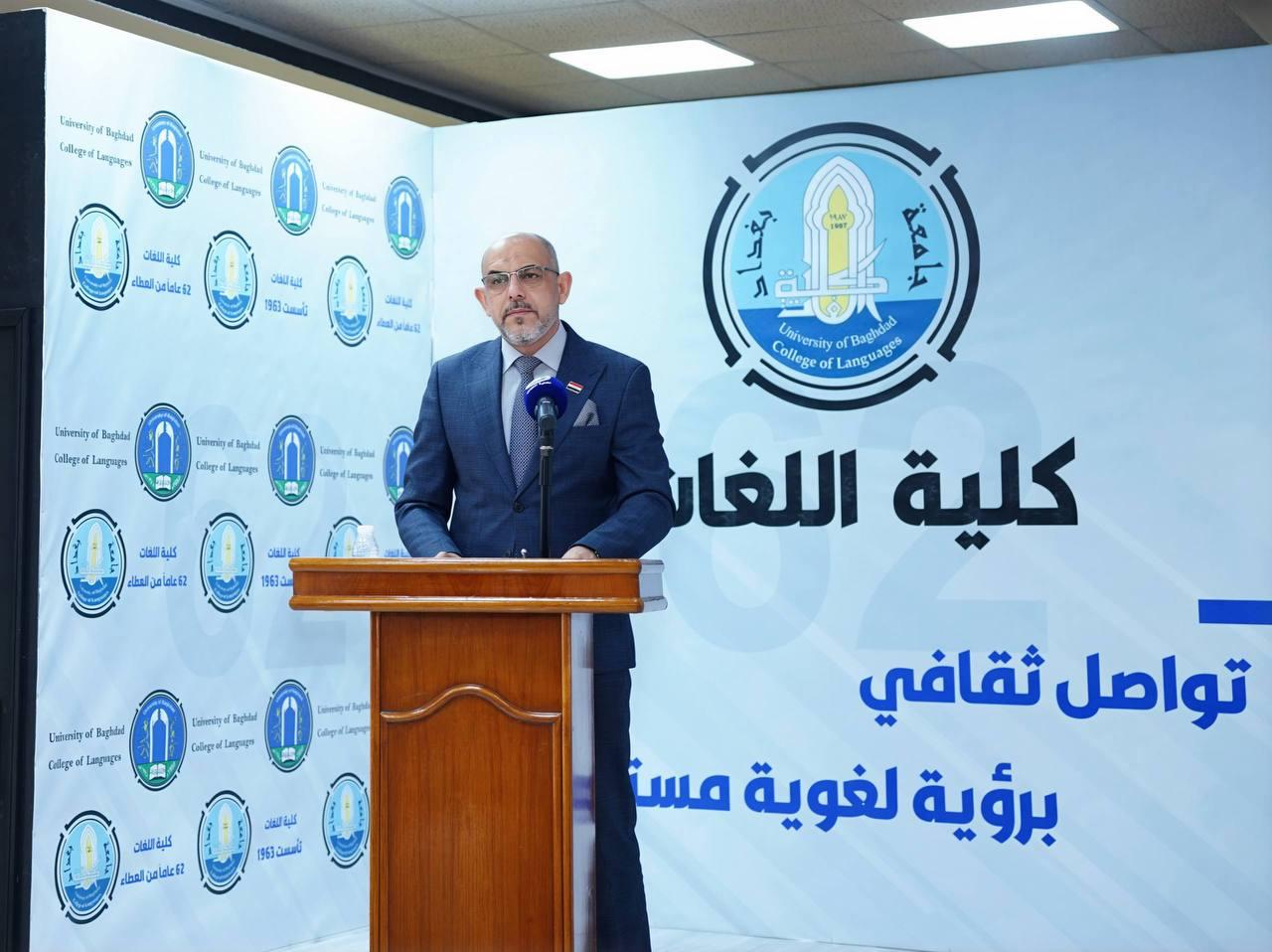
Hosted by the College of Languages at the University of Baghdad, the conference brought together a distinguished group of academics and researchers, serving as an effective platform for exchanging ideas and strengthening scientific cooperation in the fields of language, translation, and cultural studies. In his opening remarks, the Dean of the College, Prof. Dr. Ali Adnan Mashoush, stated that the conference sheds light on the significance of Eastern languages as a fundamental pillar in shaping cultural identity and enhancing human awareness.
The Head of the Scientific Committee, Prof. Dr. Dheka Mutab Hussein, discussed the relationship between human existence, identity, language, and power, and the cultural challenges surrounding them. These themes were reflected in the critical studies presented by 30 researchers, of which 20 outstanding papers were selected, focusing on translation, literature, media discourse, globalization, identity formation, memory, and methods of teaching Eastern languages.
The conference sessions addressed several themes, including the influence of non‑linguistic factors on learning Eastern languages, the linguistic history of the region and its role in shaping identities, and the impact of political and social conflicts on these languages. Additional discussions explored globalization and its relationship with Eastern languages, their presence in local and international media, their role in literary discourse, and the challenges of translating dialects.
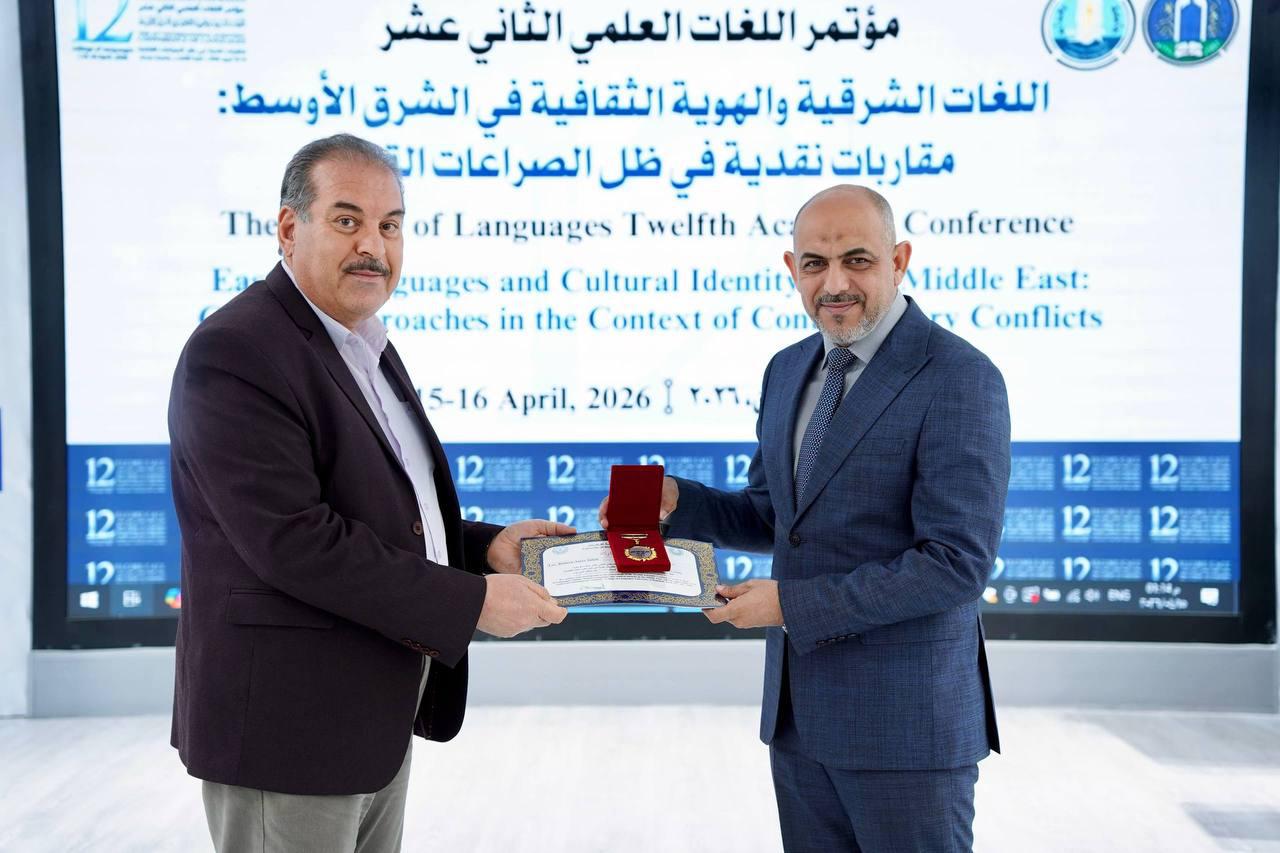
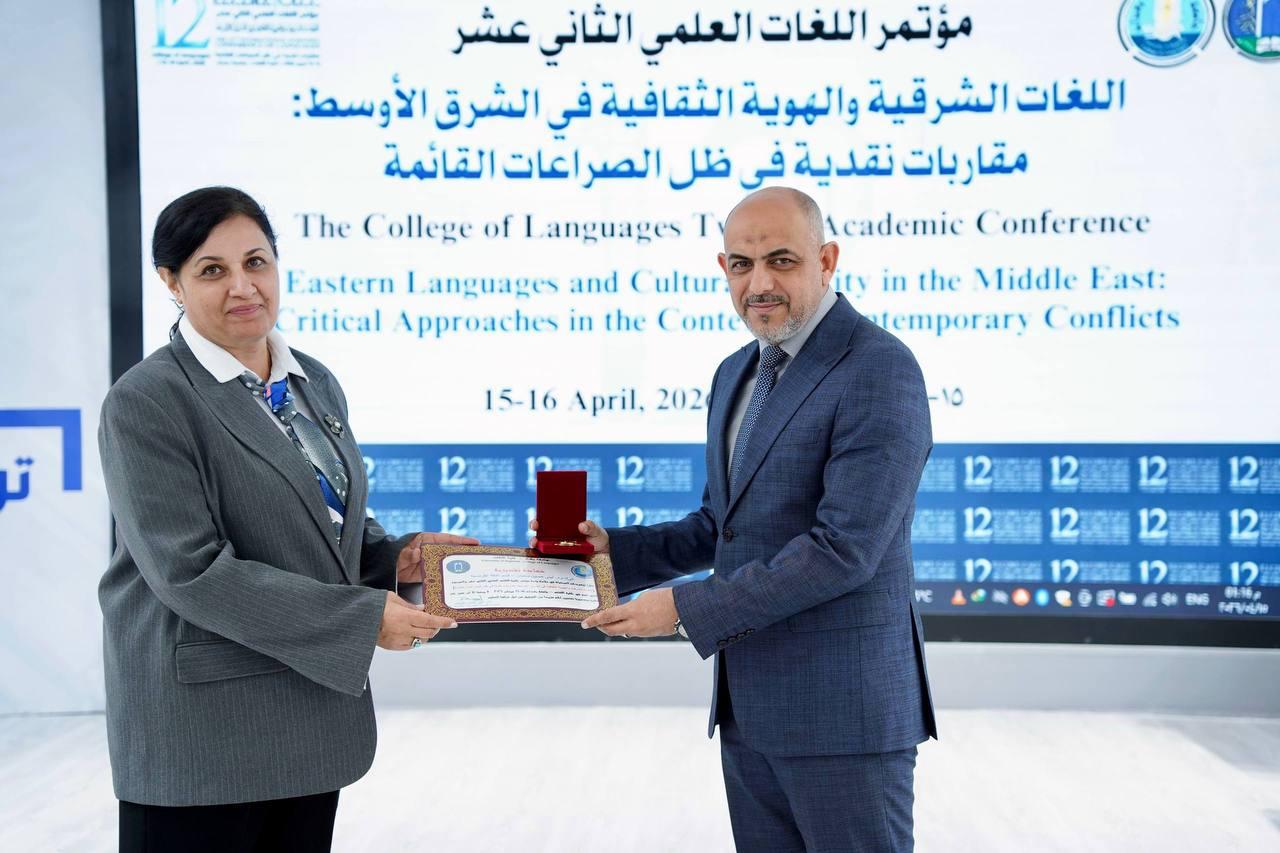
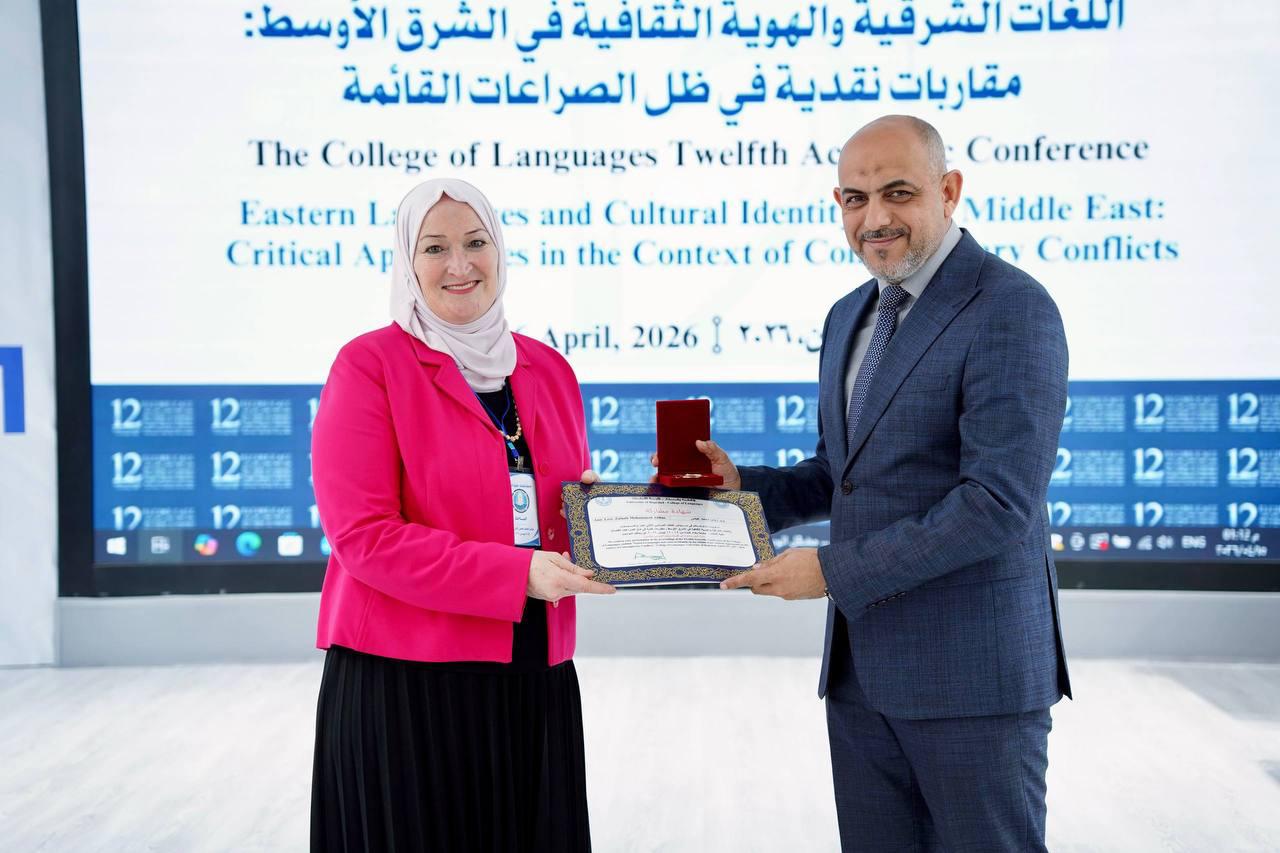
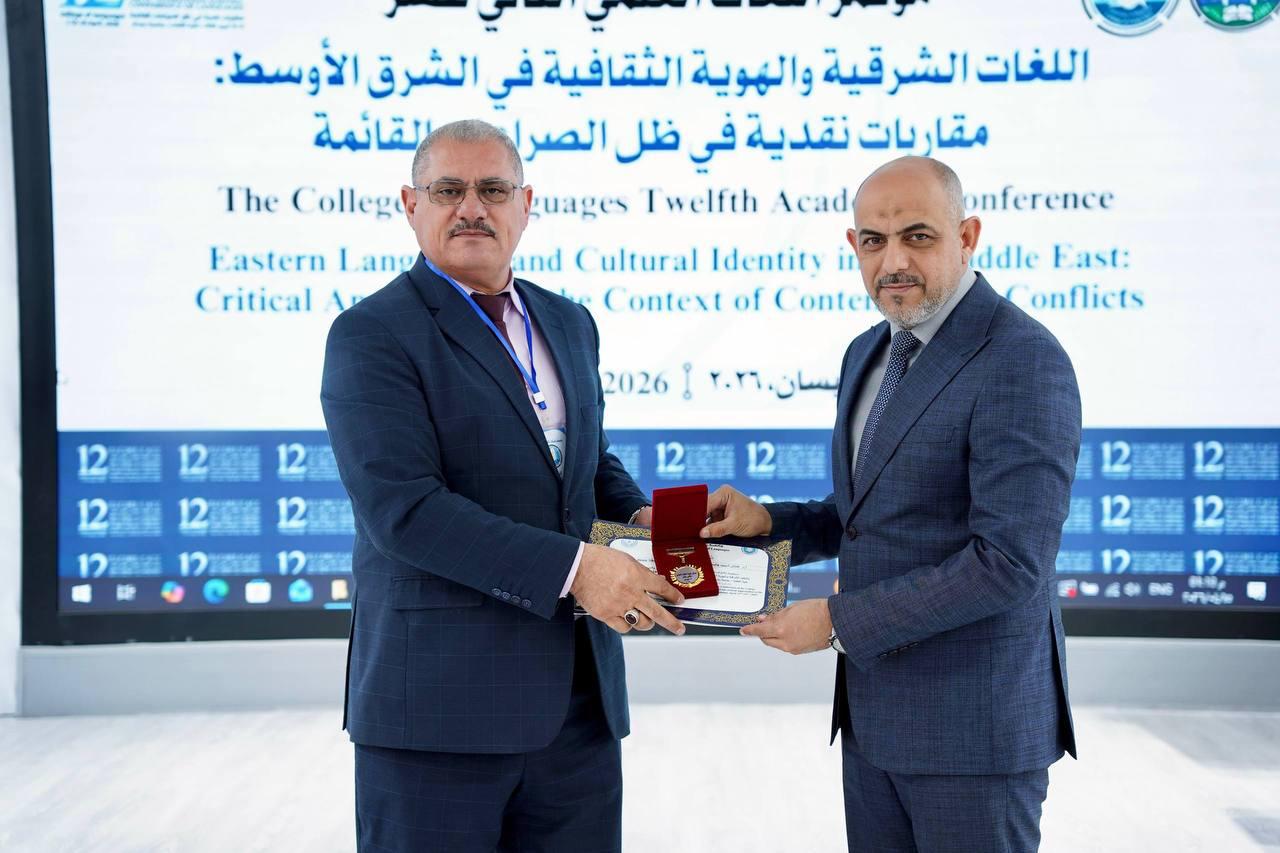
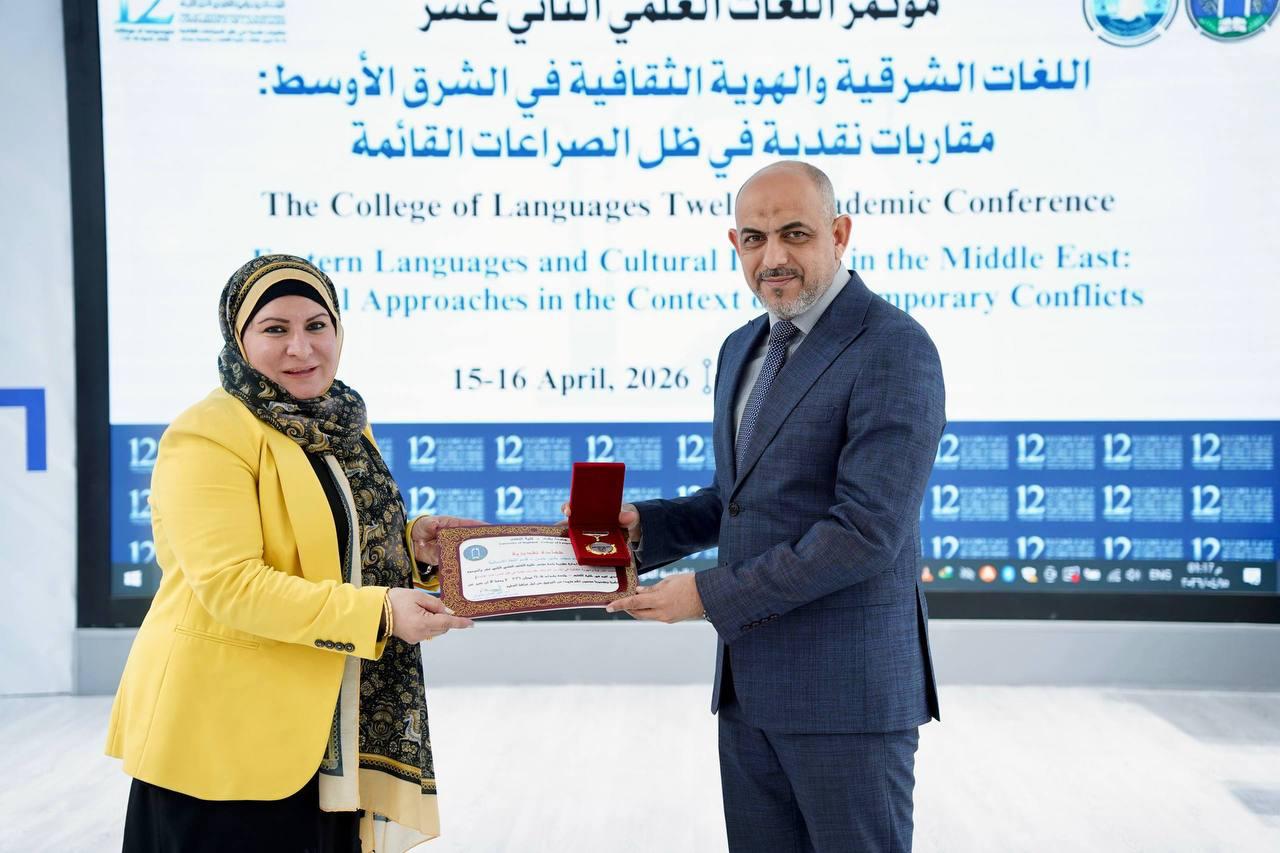
The closing ceremony included the distribution of certificates and shields to participating researchers in recognition of their scholarly contributions and their role in enriching the conference with rigorous studies on language and identity. The conference’s key recommendations emphasized the importance of building effective partnerships between universities and relevant institutions to document dialects and protect cultural identity through a just and respectful linguistic dialogue that upholds the dignity of all communities.
The recommendations also called for avoiding exclusionary discourse, promoting a culture of recognition of cultural and linguistic diversity, and preparing specialized translators capable of conveying cultural and human dimensions of texts, especially in contexts of displacement. Additionally, the conference encouraged supporting literary studies that employ dialects to reinforce values of belonging and diversity, and proposed establishing a research body dedicated to monitoring linguistic conflict and analyzing its impact on identity and affiliation.